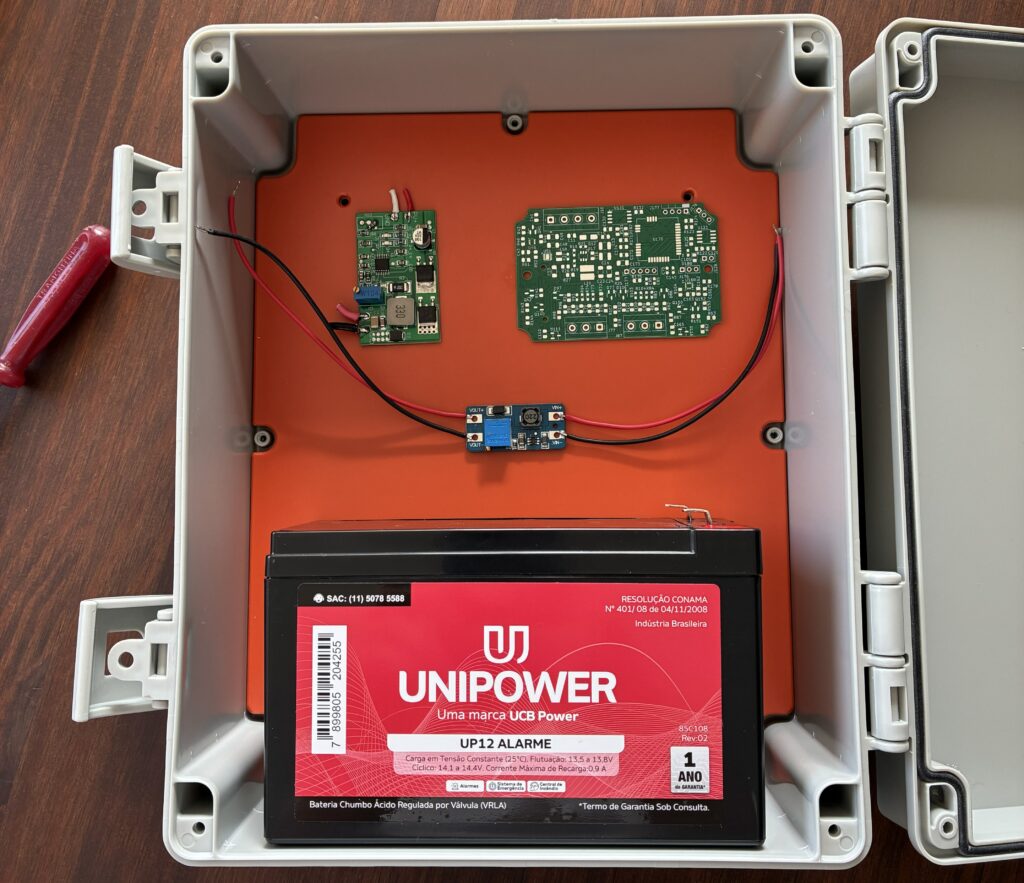
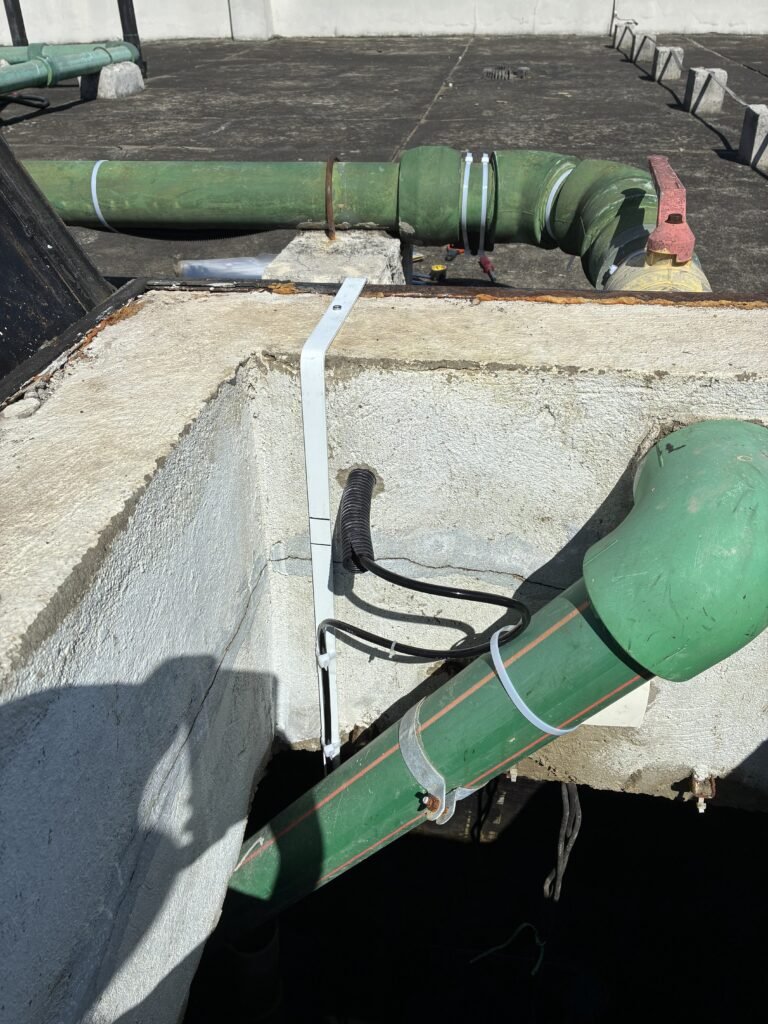
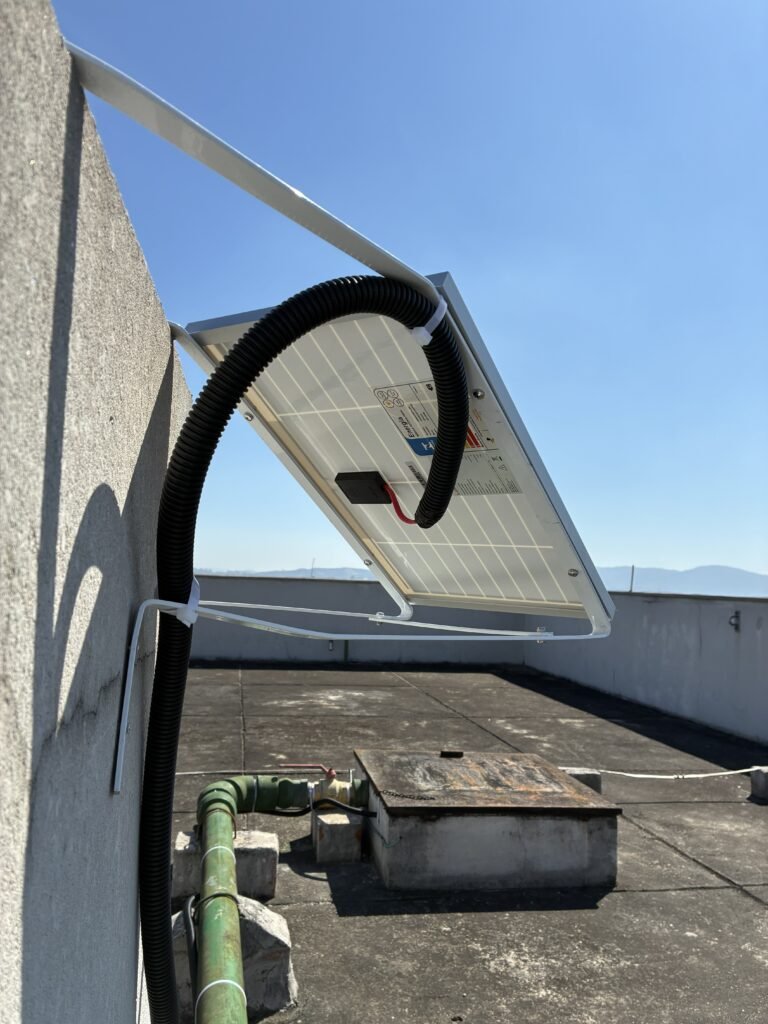
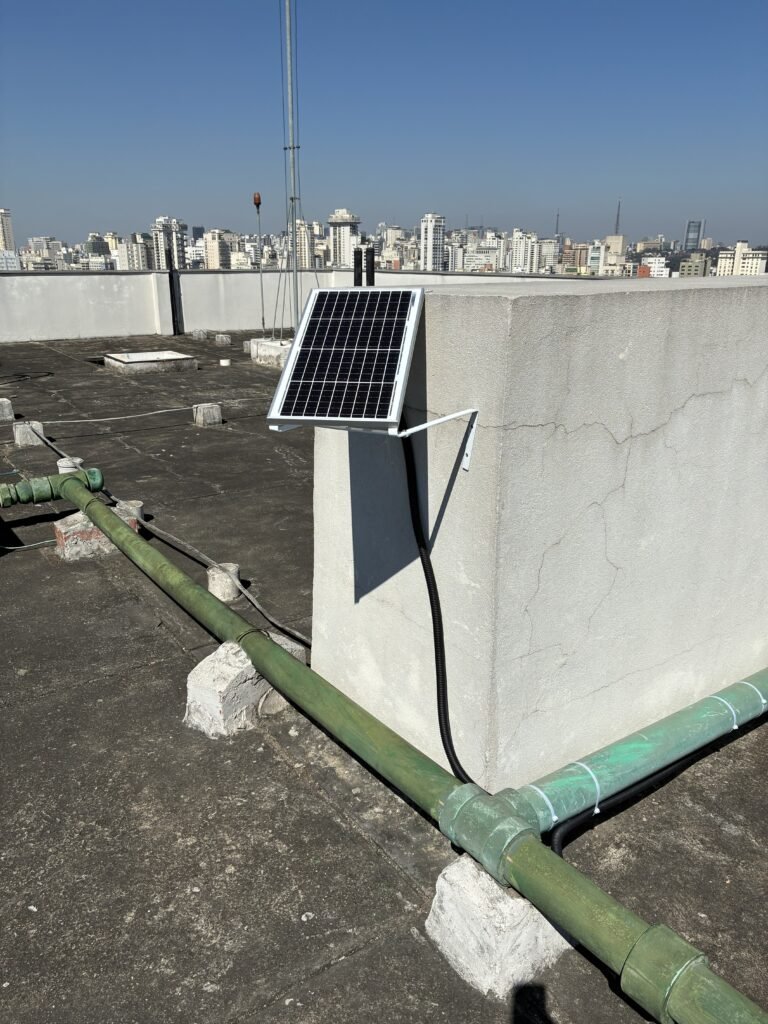
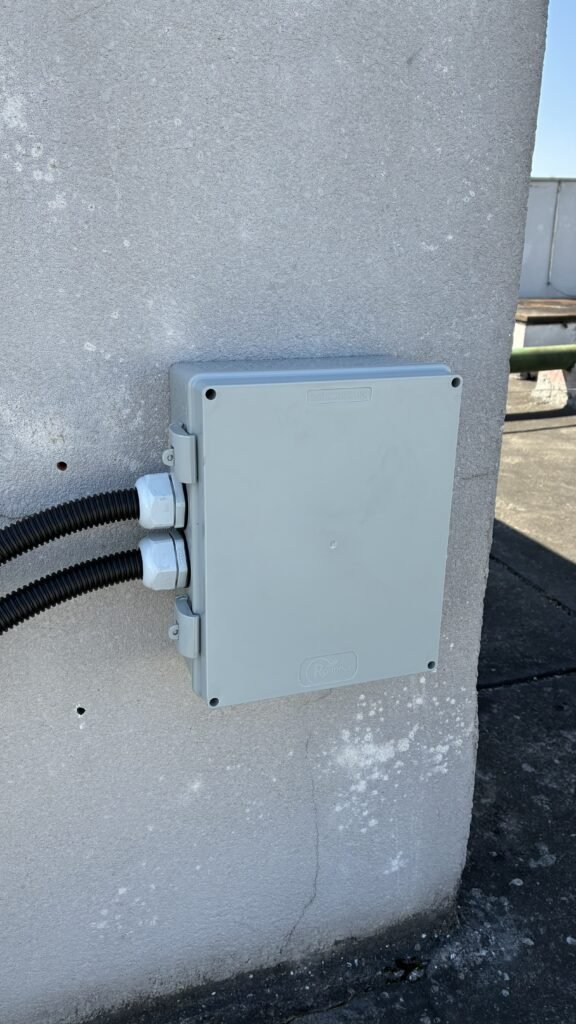
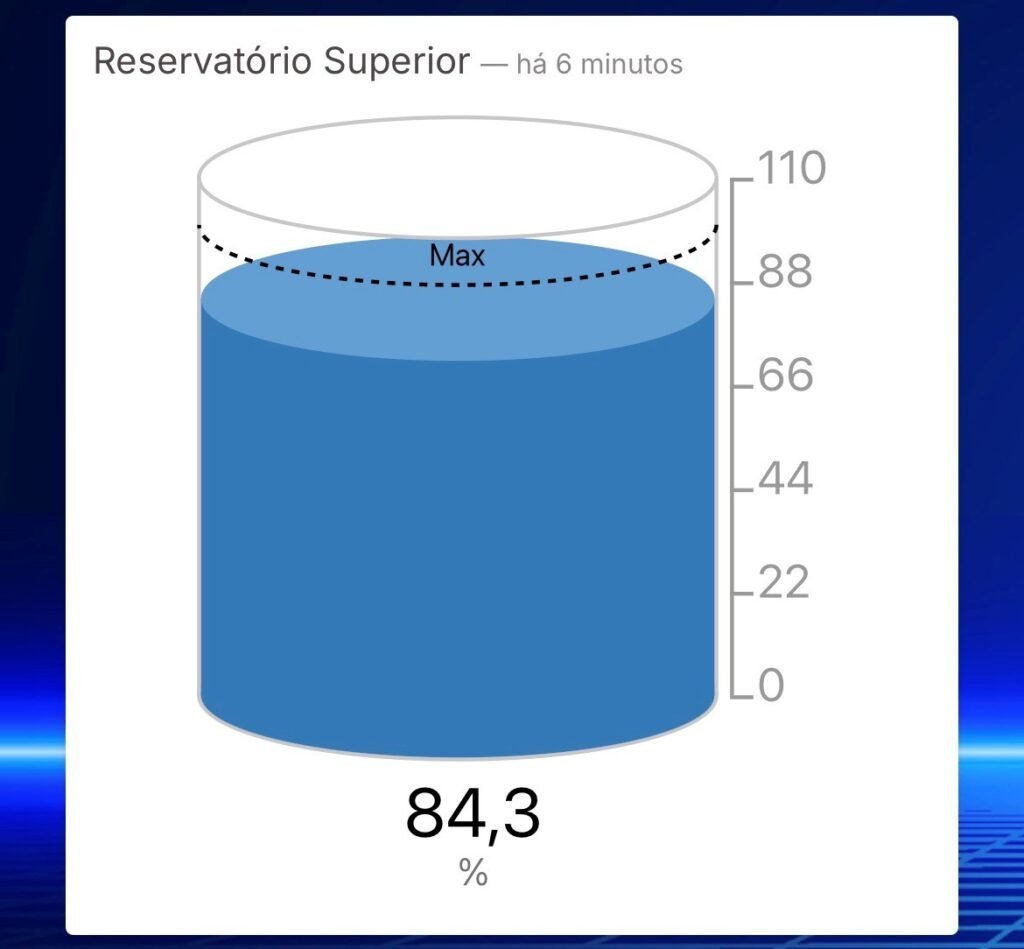
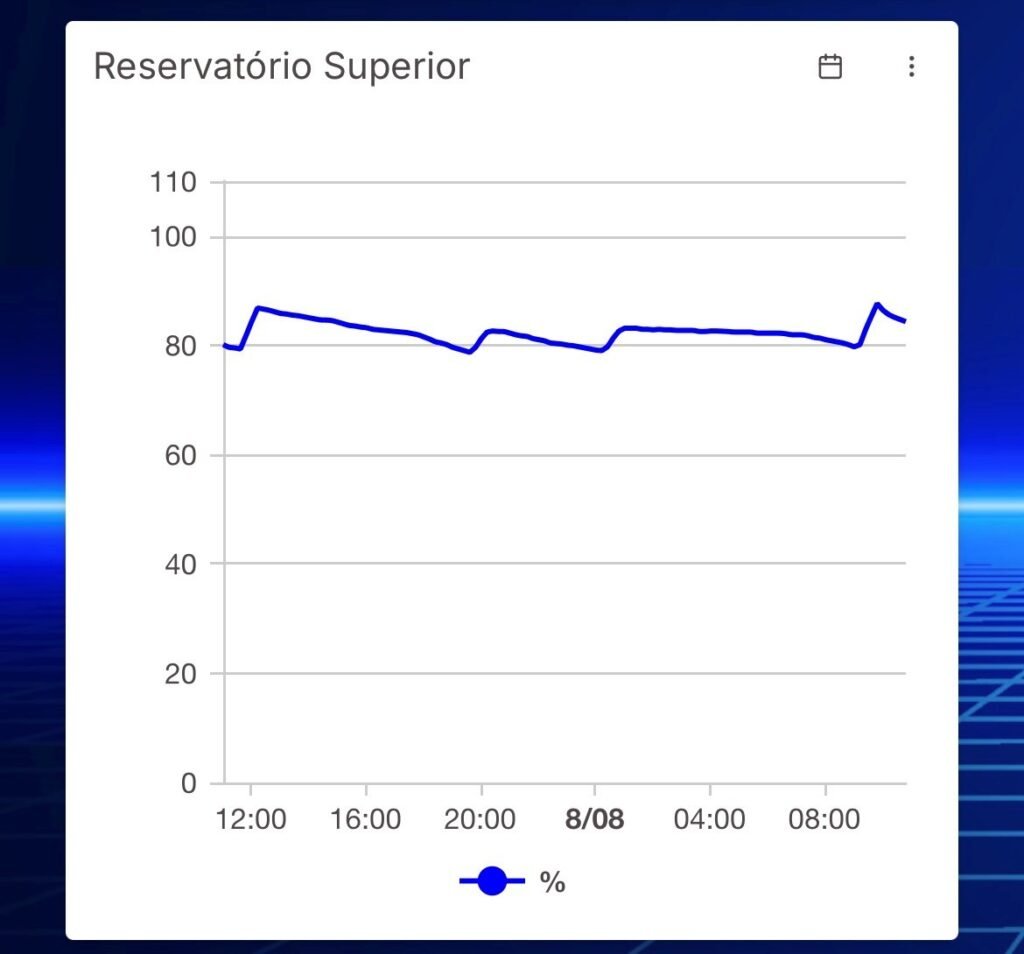
This is a LoRaWAN level sensor for a residential building, installed on the roof, powered by a battery and a solar panel. Using a solar panel was easier and cheaper than installing the infrastructure to run electrical cables to the top. Plus, it is the perfect spot for a solar panel, as there is no surrounding shade (the building has 27 floors).
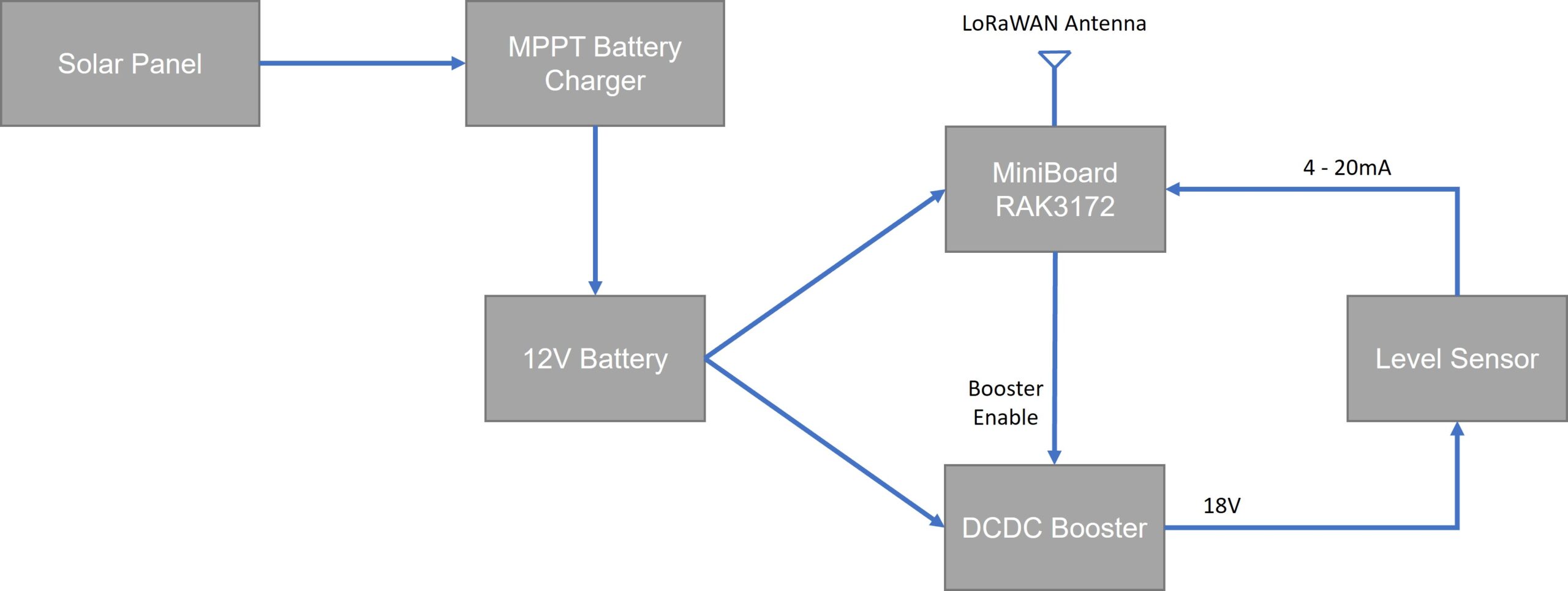
Block Diagram
Project Description
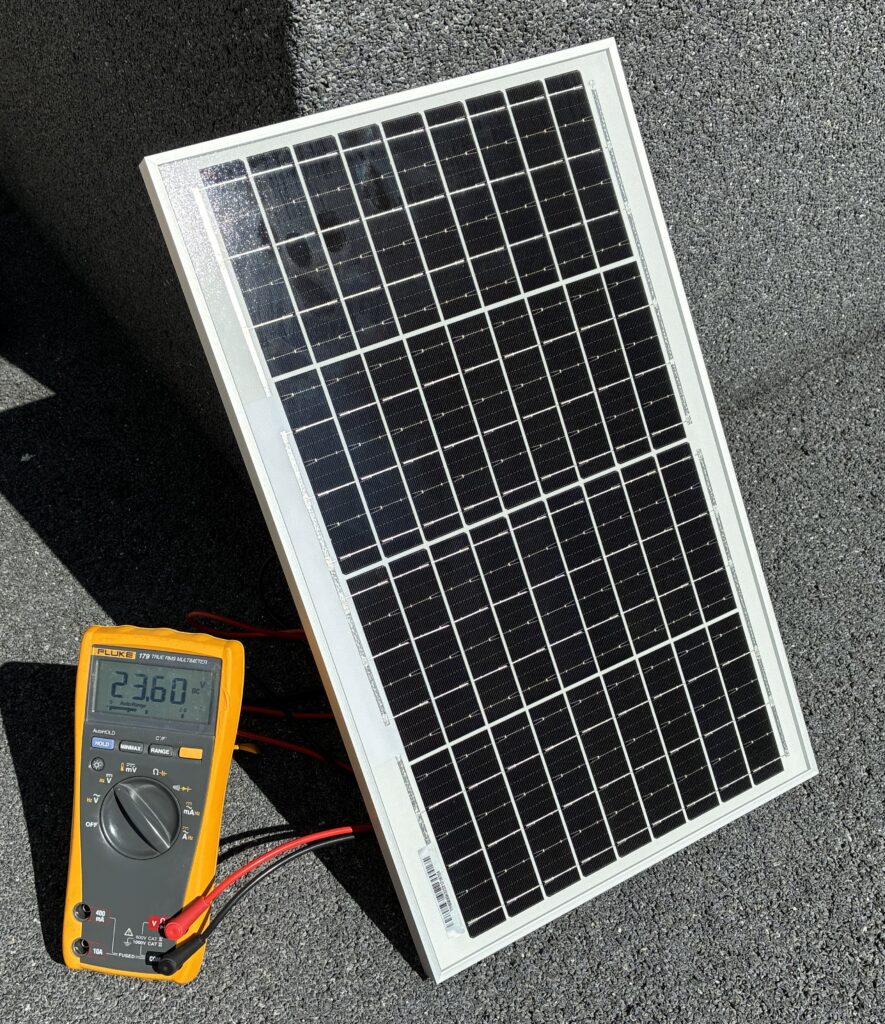
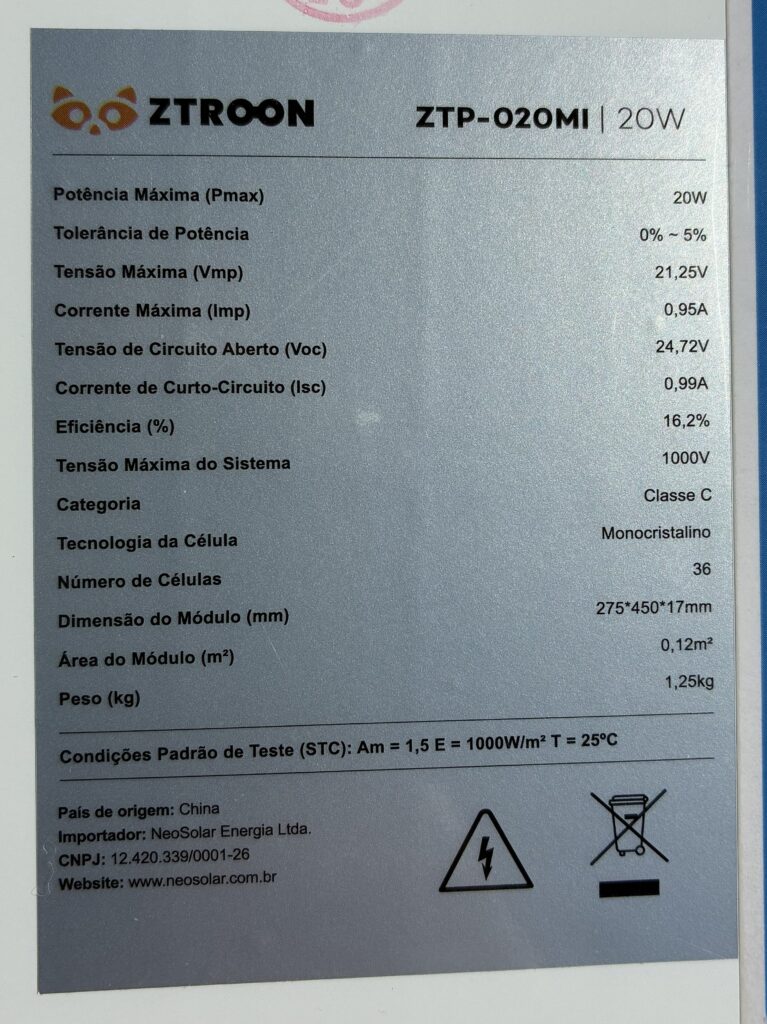
The solar panel supplies up to 24V to the MPPT charger board. The charger controls the current sent to the battery, keeping its voltage bellow 14.2V.
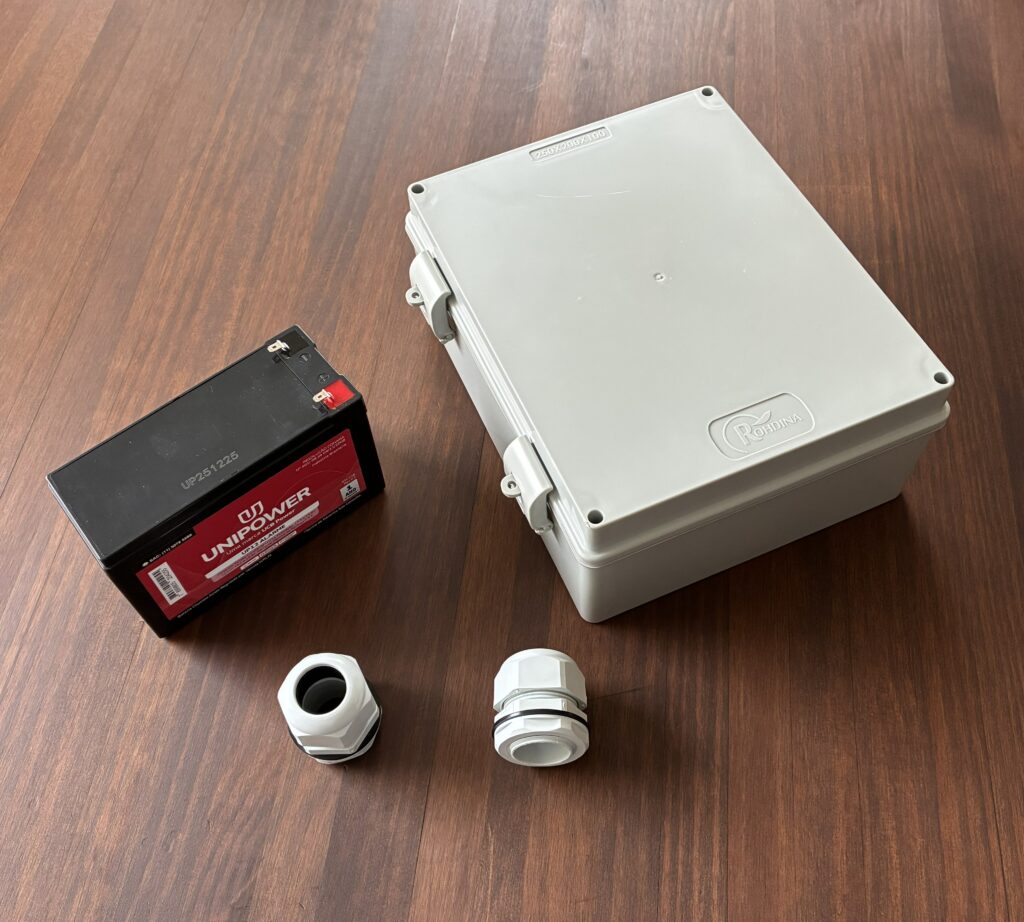
The battery is a VRLA (sealed lead-acid) type, rated at 12V and 4Ah. It was initially chosen because it is less expensive than a 4S Li-Ion pack. Its service life and performance will be evaluated.
The battery provides uninterrupted power to the IoT board and the DCDC boost converter.
The DCDC boost converter is required to supply 18V to the submersible level sensor. Otherwise, the 12V battery voltage would fall into the lower operating range when the battery is discharged, affecting the sensor’s operation.
The sensor’s power supply is controlled by the IoT board, which enables the DCDC boost converter just before the sensor reading and disabling it after. This helps achieve low quiescent current, saving battery energy during periods without sunlight.
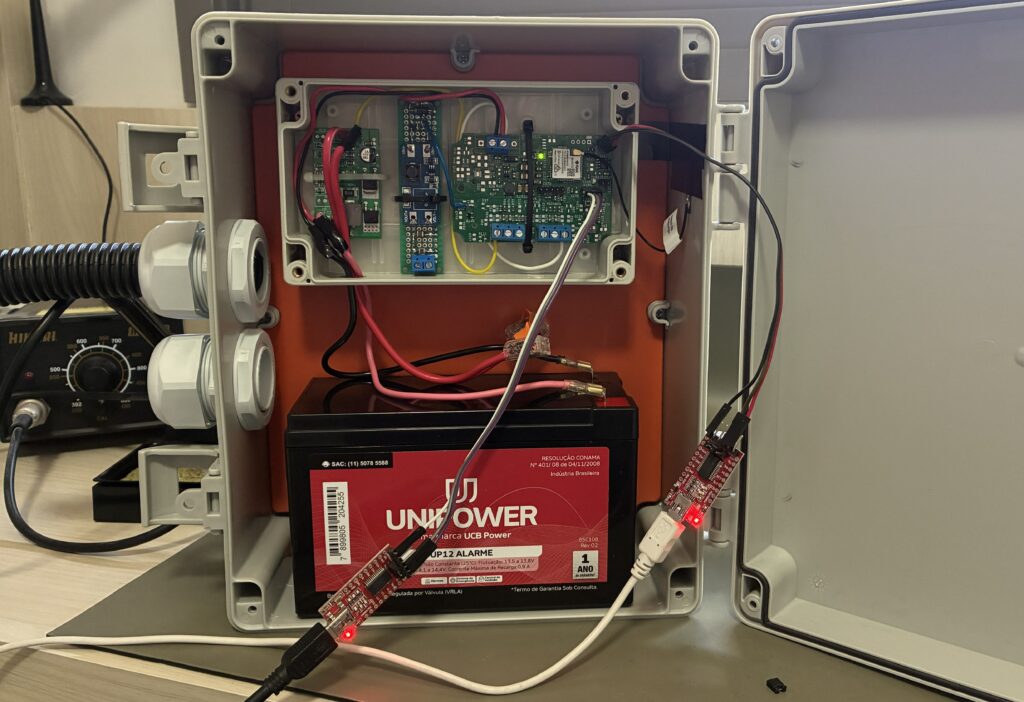
The IoT board reads the 4-20mA level sensor signal, the Solar Panel output voltage and the Battery voltage. These measurements are processed and transmitted to the server via public LoRaWAN network.
I am using TagoIO as the data platform and Netmore for the Brazilian public LoRaWAN network.
Solar Panel
Preparing the Box
System assembled, flashing the firmware
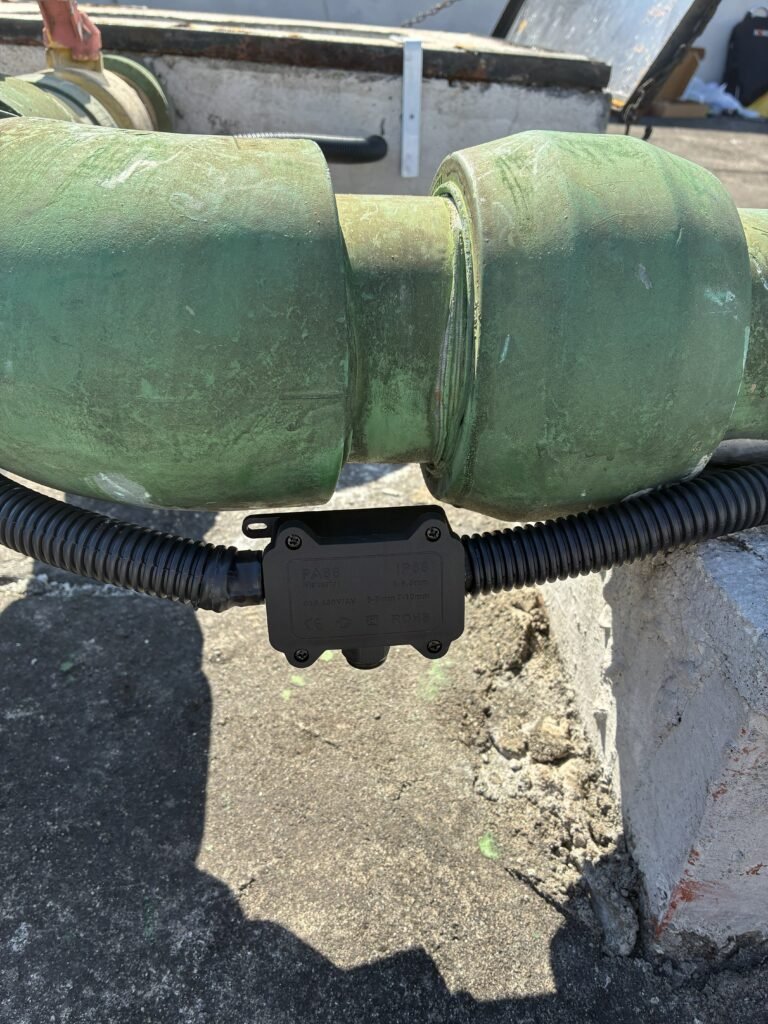
Junction Box
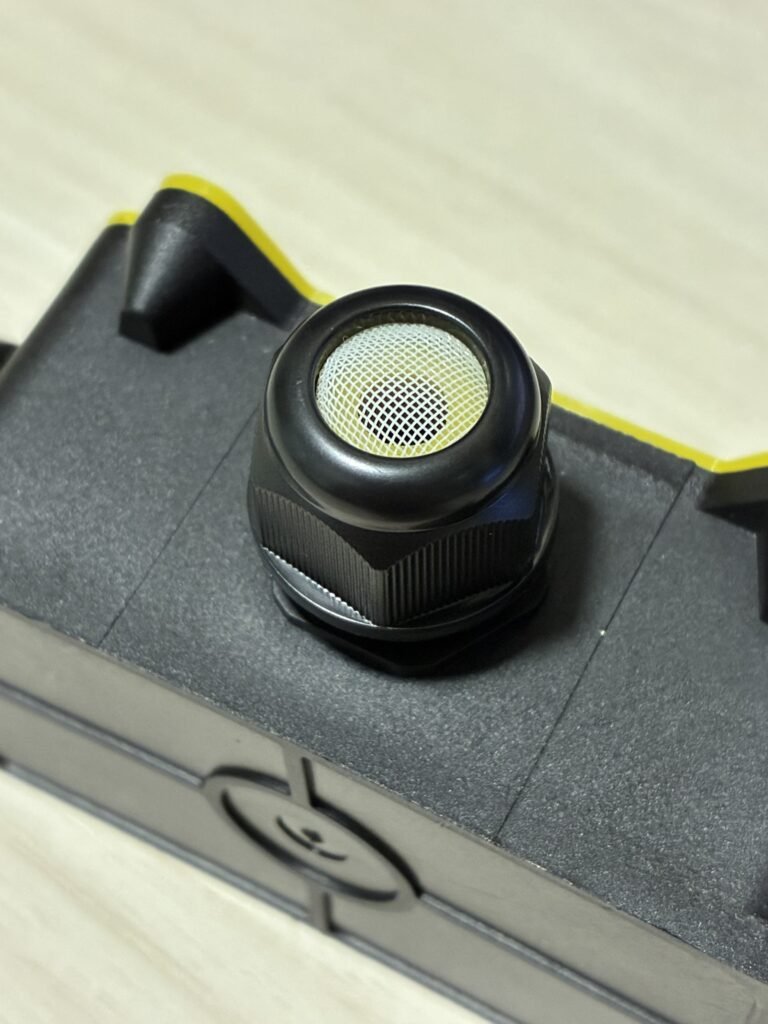
Important to note the fine nylon net in the box opening, it is to avoid the insects. The opening is mandatory due to the vent pipe of the hydrostatic sensor. The opening is pointing down to avoid water getting inside the vent pipe, as it can damage the sensor.
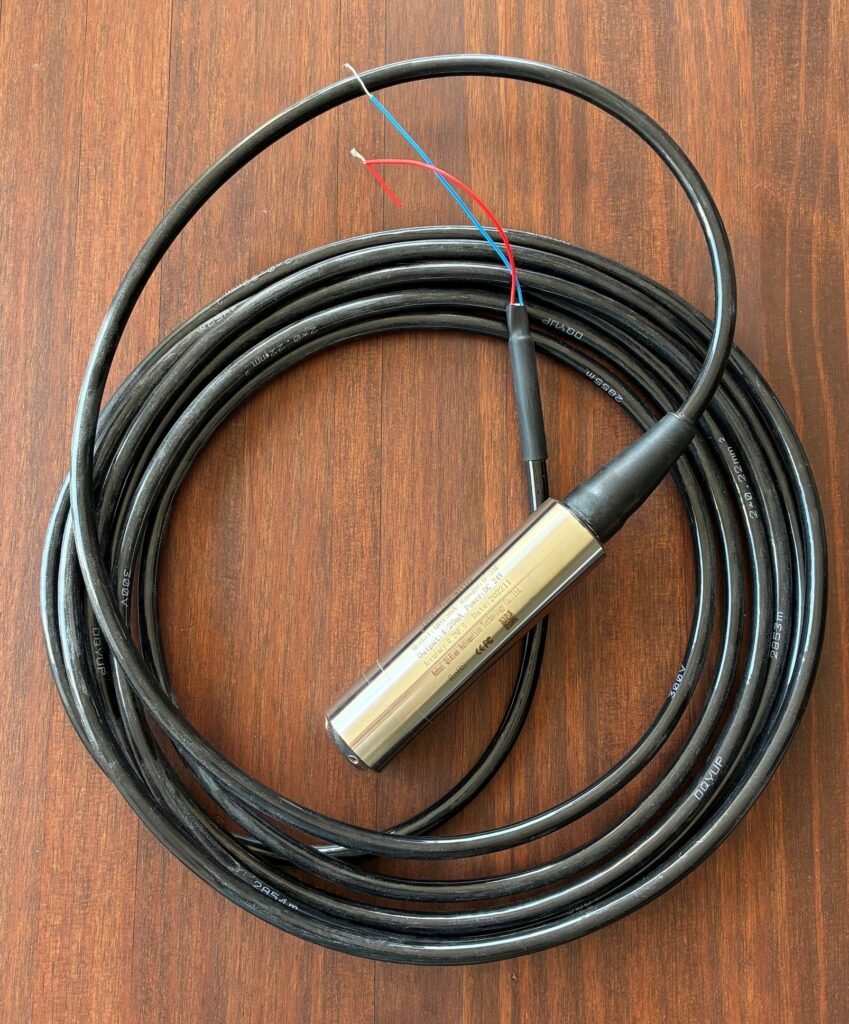
The sensor is a submersible hydrostatic, 4-20mA, 4m range. QDY30A from Anhui Qidian.